



Article: What Is Correspondence Chess and How a Game Can Last for Years

What Is Correspondence Chess and How a Game Can Last for Years
Did you know a chess move once needed a journey of its own?
The Edinburgh Chess Club had just challenged the London Chess Club to a match, and there was one small problem: about four hundred miles of road between them, and no way to sit at the same board. So they did the only thing they could. They wrote a move on a card, sealed it, handed it to the post and waited.
Then they waited some more.
The match ran from 1824 to 1828. Five games took roughly four years to finish - though, mercifully, nobody spent four straight years staring at the board.
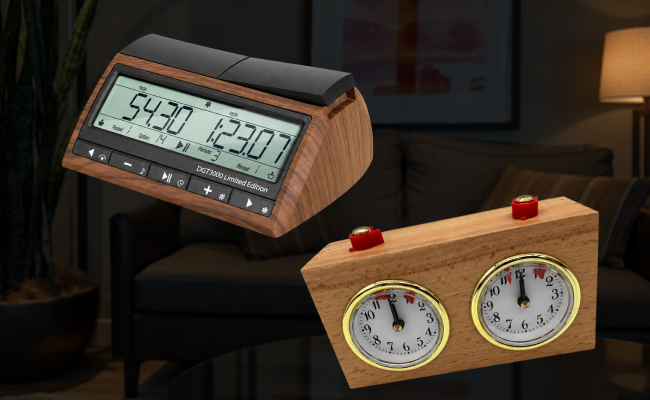
That is the whole idea behind correspondence chess: the same game you already know, played by two people in different places who send their moves to each other instead of making them face to face. There's still a clock, but it counts days instead of minutes. (New to chess clocks? Our guide to how chess clocks work explains the basics.) It sounds hopelessly old-fashioned. It is also alive and well in 2026 - and it might be the most beginner-friendly way to play a serious game of chess there is.
In this article, you will learn:
- What correspondence chess is and how a game is actually played
- Why a game measured in weeks still needs a deadline
- The famous 1824 postal match that gave the Scotch Game its name
- How postal chess grew into a worldwide federation with its own titles
- Meet the Australian who became the first world correspondence chess champion
- Whether players are allowed to use a chess engine
- How to start your first correspondence game this week
How Correspondence Chess Works
The board does not change. You still have sixteen pieces, you still move one at a time, and you still win by checkmating the other king. What changes is the distance - and, with it, the whole rhythm of the game.
Instead of waiting for someone across the table, you get a notification. You set up the position, study it for as long as you like, choose your move and send it. Your opponent does the same, whenever it suits them. In the old days that meant writing the move on a card and posting it. Today a web server does the job: it shows the position, records every move and quietly keeps track of the clock.
And here is the part that surprises newcomers: the clock is measured in days, not minutes.

Most events give you a bank of days for a set number of moves – the international standard is 50 days for every 10 moves – and you spend it however you like, moving quickly when the answer's obvious and slowly when it isn't. Casual online games often use a simpler per-move deadline instead. The exact system depends on the organiser, so the golden rule is to read the tournament's rules before your first move. New to the game entirely? Our Beginner's Guide covers how the pieces move first - correspondence chess assumes you already know that part.
Why a Slow Game Still Needs a Deadline
Here is a fair question: if you have days to move, why bother with a clock at all?
Because without a finish line, there is nothing to stop someone leaving a losing position untouched for a month. Then another month. The opponent waits, helpless, while a perfectly good game rots in an inbox. Time limits turn a vague promise to reply into a real contest with real responsibility on both sides.
Think of it this way. A chess clock squeezes a face-to-face game into minutes and hours. Correspondence chess takes that exact same idea and stretches it across a calendar instead of a small ticking display. Same pressure, different pace.
And the pressure is real. A serious player might have a dozen correspondence games running at once, each with its own position and its own deadline - one due tonight, another with a week to spare. Miss a single one and you can lose a game you were winning, purely on time. In correspondence chess, a diary can matter as much as a clever opening.
Most formal events also allow leave - time away for holidays, illness or life getting in the way. That single detail tells you how serious this format is: the rules have to account for ordinary human life, because a tournament can genuinely outlast a house move.
The Match That Made Chess Travel
Back to Edinburgh and London.

Edinburgh from Calton Hill, 1829. Thomas Hosmer Shepherd. British Library collection, via Wikimedia Commons.
This was no casual game of postal ping-pong. Members of each club gathered to argue over the position, tested variations together, and only then agreed on the move to send. One group would debate in Edinburgh while the other did exactly the same in London, days later, over the same board in reverse. Every envelope carried the work of a whole club, not the whim of one person.
Edinburgh came out ahead - two wins, one loss and two draws across the five games. London conceded the deciding game on 31 July 1828, at the sixtieth move.
The match left chess a lasting souvenir. It helped attach Scotland's name to the opening that begins 1.e4 e5 2.Nf3 Nc6 3.d4 - the Scotch Game, still played at the top level today. The opening itself was older than the match, so Edinburgh did not invent it. They just gave it a nationality.
What is striking, reading it now, is how involved the players stayed between moves. The game crawled. The thinking never did.
From Club Letters to a World Federation
Once chess proved it could travel, it did not stop.
Through the nineteenth and twentieth centuries, clubs and magazines ran postal matches between cities and countries. For the first time, you could play a serious game against a strong opponent without ever leaving your town - a genuinely radical idea when a tournament meant days of travel.
Eventually the format grew up. The International Correspondence Chess Federation (ICCF) we know today was founded on 26 March 1951. Its family tree runs back through the International Correspondence Chess Association, formed in 1945, to the Internationaler Fernschachbund, founded in Berlin in 1928. Ratings, titles, world championships - correspondence chess has the lot, played today through the ICCF's own web server.
So who was the first world champion? An Australian. Cecil John Seddon Purdy won the first World Correspondence Chess Championship. He played the world's best from his home in Sydney and lost only one game. He also won the Australian Championship four times. Many people say he taught chess even better than he played it. Bobby Fischer called him a great chess teacher.
Purdy also started a chess magazine. He launched it in 1929 as the Australasian Chess Review. From 1946 to 1967, he called it Chess World. Sound familiar? That's our name too. We'll tell Purdy's full story in a future post.
Postal play also carried all the mess of real life. Letters arrived late, went missing, or got stuck at a border. Players carried games through wars, illnesses and house moves. A server has swept most of that away - but not the need for records and rules. Send the wrong move or miss a deadline, and the event still needs a fair way to sort it out.
What It Actually Feels Like to Play
The first thing a blitz player notices is the silence.
Nobody says "your move." Nobody taps the table. The position just sits there - on a screen, or on a board in the corner of your kitchen - while both of you get on with work, family and sleep. A brilliant reply might land during breakfast. A nasty one might sit beside the kettle for three days, looking completely innocent and causing no end of trouble.
That slower rhythm changes the kind of attention chess asks for. You can study a move, walk away, come back with a clear head and weigh three plans against each other. The extra time does not guarantee a better decision, mind you. It has its own trap: you can spend two whole days comparing two moves that were basically equal from the start.
A physical board helps a lot of players here. Leave the position set up, walk past it during the day, and a new idea often arrives without you opening a single app. A notebook helps too - because a correspondence game can last long enough that you genuinely forget why your rook is sitting on that square. Short on space? Try the fridge. A magnetic board holds your position in place, and you'll see your game every time you grab the milk.
One last thing the format rewards: care. Online, the server checks that your move is legal, which removes a lot of old postal disputes. But it will happily send a legal move you never meant to make. A computer can reject an illegal move. It cannot rescue a careless one. Look before you press submit.
Notation and Analysis Still Matter
A correspondence game leaves a paper trail, and that is a feature, not a chore. Recording every move lets you rebuild the position, check an earlier decision and study the whole thing after it ends.
Most players use algebraic notation, where a move like Nf3 names the piece and its destination square. Some events use a numeric system that records the starting and ending squares as numbers instead. The tournament rules decide which one you use. If notation is new to you, our simple guide to reading and writing chess notation will get you fluent quickly - and it is a skill that pays off in every format, not just this one.
Writing things down also makes you a better player. Before you move, jot down your opponent's last idea, list the forcing replies and check what actually changes on the board. It sounds fussy. It quietly prevents the most common mistake in chess: falling in love with the move you want to play and forgetting to ask what the other person wants next.
Can You Use a Chess Engine?
The honest answer: it depends entirely on the event.

In ICCF-rated events, engine assistance is allowed. That turns elite correspondence chess into something unusual: a partnership between human judgement and machine calculation, rather than a test of unaided brainpower. Other clubs, platforms and casual games often ban engines outright - so never assume a tool is allowed just because another event permits it.
Even with an engine, though, the human is still doing the real work: choosing which positions to dig into, comparing plans, and deciding which of a dozen games actually matters most this week. A machine can spit out five strong lines. It will not take responsibility for a missed deadline. (If you have ever wondered why a chatbot is brilliant at explaining chess yet hopeless at playing it, we went down that exact rabbit hole in Why Is ChatGPT Bad at Chess?)
Prefer a fair fight with no computers? Agree on that with your opponent before the first move. A clean game just needs both people to know the conditions up front.
How to Start Playing Correspondence Chess
The easiest way in is a daily game on a reputable online platform. Pick a few days per move, read the site's rules and - this is the important bit - start with one game, not ten. Your only goal at first is simple: move on time, keep track of the position, and review the game once it is done. One well-run game teaches more than a crowded account full of forgotten deadlines.
Prefer the real thing? Set up a permanent little station: a board you can leave undisturbed, a notebook, and a comfortable chair. Keep the pieces exactly where they are between moves, and write each move down before you walk away. That one habit protects your game from a faulty memory, a curious cat, or the classic household mystery of a rook that moved while nobody was looking.
A magnetic set is worth its weight here - the pieces stay put when the board gets nudged, which is precisely what you want when a single game might live on your shelf for months.
And if you fancy formal international competition one day, read the current ICCF rules, check the recognised member federations and look at the events on offer. The fine print is less thrilling than a brilliant sacrifice. It also prevents a lot of avoidable losses.
Common Mistakes in Long-Distance Chess
- Checking the position but forgetting to submit the move. The move sat in your head, not your opponent's inbox. Deadline lost.
- Over-analysing one attractive line for days instead of comparing your opponent's most practical reply.
- Failing to record the position after a move, or after the board gets bumped.
- Starting too many games before you have a system for reminders and notes.
- Assuming one event's rules apply everywhere. They do not - engine rules especially.
These sound ordinary because they are. Correspondence chess tests organisation as much as chess skill. You can spot a winning move and still lose - because it stayed in your notebook instead of reaching your opponent.
Why Correspondence Chess Still Works
Correspondence chess began as a practical answer to distance. It has survived because distance was never really the point.
The format gives you time to think, room for a busy life, and a complete record of a game that can stay alive for months. It suits the shift worker replying on a lunch break, the parent moving a piece after the school run, the night owl and the early riser who could never agree on a time to sit down together. You do not need a free afternoon or a famous brain. You just need ten spare minutes and a little discipline. That is chess showing its true face - a game for everyone, not the tortured-genius caricature the movies love.
It also turns a chess set into a quiet, permanent part of your home. The board waits. The position shifts. The next decision arrives when it arrives.
If this has made you want to leave a game set up in the corner and let it unfold over weeks, we would love to help you find the right board to do it on. We have been helping Australians find their perfect chess set since 1994 - and we are pretty good at it.
→ Chess Boards - the permanent station your correspondence games deserve
→ Magnetic Sets - pieces that stay put for study, travel and long games on a shelf
→ Tournament Sets - never the wrong choice
→ Chess Clocks - for when you want the ticking kind of time pressure instead
References
- Scotch Game and the 1824 Edinburgh - London match: Wikipedia - Scotch Game
- Match dates and result: chessgames.com - 1824 Edinburgh Chess Club vs London Chess Club
- ICCF founding and predecessor bodies: Wikipedia - International Correspondence Chess Federation
- C.J.S. Purdy: Wikipedia - Cecil Purdy
- ICCF rules and events: ICCF official site