Posted by Chess World on 12th Oct 2025
The Machine That Made the World Believe in Artificial Intelligence
Long before computers or artificial intelligence, a mysterious chess-playing machine made the world wonder if machines could truly think.
What You’ll Learn
-
The first chess machine that fooled the world
-
How it amazed queens, kings, and inventors
-
Who built it and why
-
Who the Turk defeated – and who finally beat it
-
How the trick worked
-
Its link to early computers and AI
-
How it inspired modern chess machines from DGT and Millennium
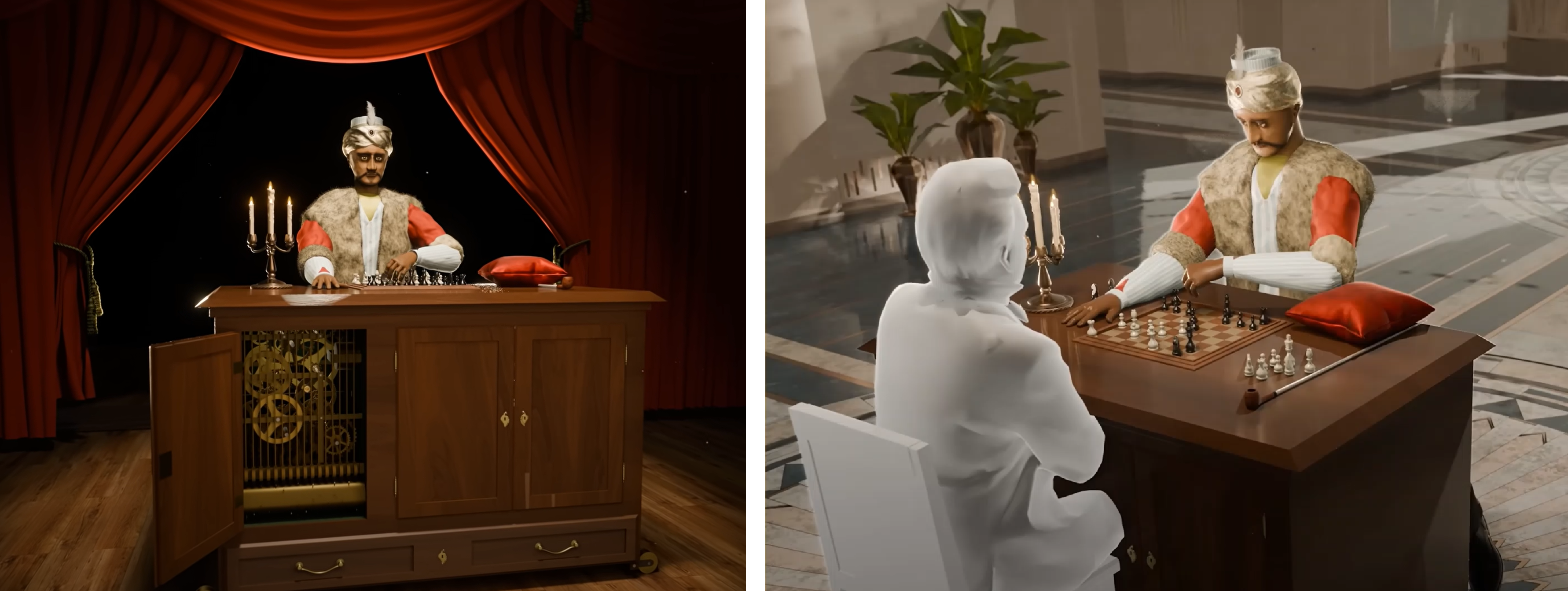
Modern Animations of the legendary Mechanical Turk (by Primal Space)
The legend of the mechanical Turk
The clothes you wear, the food you eat, and just about every object you see or use was made with the help of machines. This wasn’t always so. Before the Industrial Revolution, everything was made by hand.
The dawn of the Industrial Revolution was in the mid-1700s.
First attempts at making mechanical devices were quite simple—the main one being mechanical clocks. Engineers would also create other novelty machines like a wind-up duck which walked and flapped its wings, a mechanical trumpet player, and various others.
Such novelty mechanisms were called automata, and people would pay to see them exhibited just like we now go to the movies or a concert. Often such exhibitions would also have a magic show.
Wolfgang Von Kempelen was the chief engineer of Hungary in the mid-1700s. His job was to design and build bridges, roads, buildings, and sewerage systems for Queen Maria Theresa. He also built automata as a hobby.
His other duty was to go with the Queen when she attended magic shows and explain how the various tricks worked. One day, the Queen was watching a magic show by a French magician, Pellier, when Von Kempelen said the show was awful and that he could do much better.
“Alright,” said the Queen, “you have six months off your engineering duties—show me the best magic show I’ve ever seen!”
Oops. Von Kempelen now had to make good on his boast or lose his job, so he set to work.
Finally, the big day came.
First, Von Kempelen displayed an automatic flute player. The Queen yawned. Then he showed a keyboard which could speak words. The Queen rolled her eyes. Next, he showed the Queen what was to become the most famous machine of its time.
Von Kempelen rolled out onto the stage a large box with a wooden dummy dressed as a Turk (someone from Turkey) sitting across from a chessboard on the top of the cabinet.
He opened the cabinet and showed the clockwork inside. Then, from inside the cabinet, he took a set of chessmen and set up the board for a game. “Your Majesty, would you like to play chess against my machine?” he proudly asked.

The Queen sat opposite the Turk. Von Kempelen took out a large key and wound up the Turk. The clockwork started ticking, and then the Turk reached out his arm and made a move. The arm went back to its resting position and the clockwork fell silent.
The Queen made her move, and then the clockwork again immediately sprang to life as the Turk played his reply. Within 20 moves, the Turk had won.
The Queen and everyone at court were astounded and burst into applause.
The Queen delighted in showing off her engineer’s machine to all the important visitors to Vienna and then ordered Von Kempelen to take it on tour throughout Europe.
- by Andrew LeRoy
Checkout this amazing informative video with wonderful animations of the Turk
The Secret Inside the Box
Von Kempelen’s invention soon became the sensation of Europe. Everywhere it travelled, people lined up to witness the miracle of a machine that could think. The Turk won game after game, astonishing crowds with its calm precision and apparent intelligence. It defeated nobles, scientists, and strong amateurs alike, often in front of hundreds of spectators.
Its fame peaked in Paris, then the centre of the chess world. There, it faced one of its most curious and challenging audiences yet. Among its many celebrated opponents were Benjamin Franklin, who played it while serving as the American ambassador to France, and Napoleon Bonaparte himself. Napoleon, suspicious that the “machine” was somehow controlled by a person, tried to cheat—making illegal moves to see what would happen. The Turk quietly reset the pieces and continued as if nothing had occurred. Once again, it won.
But even this marvellous automaton met its match. When it played François-André Philidor, the greatest chess player of the 18th century, the illusion of invincibility was finally broken. After a tense and methodical battle, Philidor defeated the Turk - proving that even the most extraordinary invention of its time could not surpass the world’s finest human mind.
Despite the countless demonstrations, many suspected that the Turk was a trick — engineers, scientists, and even sceptics examined it closely, but nothing was ever proven...
The Secret Inside the Box
Of course, it was a trick. For nearly 90 years, the secret remained hidden: a skilled chess master was concealed inside the cabinet, operating the dummy using a system of levers and magnets . The interior of the machine was cleverly designed with sliding panels and compartments, allowing the hidden player to remain unseen even when Von Kempelen opened the doors for inspection (checkout the video above for more detailed explanation).
Over the decades, several strong chess players are believed to have taken turns operating the Turk, including Johann Allgaier, who helped popularise the opening now known as the Allgaier Gambit. None ever revealed the secret publicly during its touring years, preserving the illusion that a machine was truly capable of thought.
While the illusion fooled audiences around the world, its influence was real. The Turk inspired inventors like Edmund Cartwright, who went on to create the power loom, and Charles Babbage, whose early “difference engine” would lay the foundation for modern computing. Even showman P. T. Barnum later borrowed from the Turk’s spectacle for his own exhibitions.
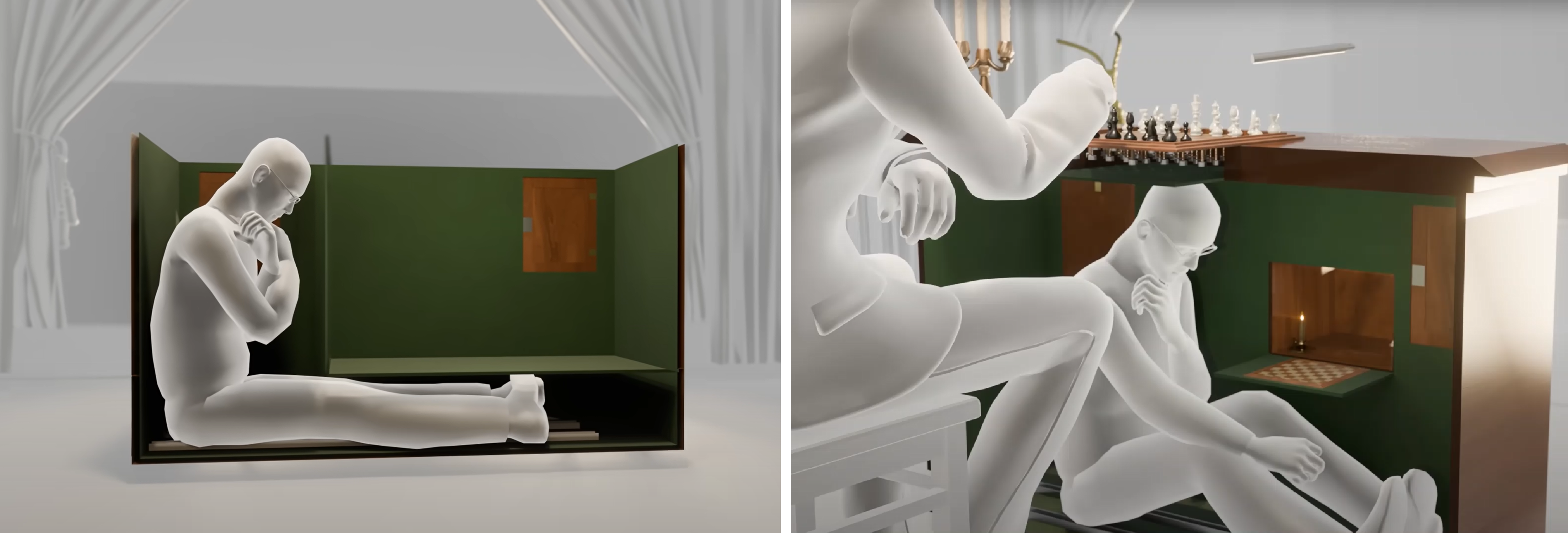
Modern Animations of the secret inner workings of the Turk: the fake machinery didn't extend all the way to the back, the operator would sit down with his legs streched out under the fake floor and be able to slide forward on a movable chair - he would then control the chessboard with a mechanical lever (by Primal Space)
Legacy of a Clockwork Genius
Though exposed as a fraud, the Mechanical Turk changed history. It made people believe that thought and intelligence might one day be replicated by machines. It accelerated curiosity during the Industrial Revolution and popularised chess worldwide.
Centuries later, the name “Mechanical Turk” would be revived by Amazon for a platform combining human and artificial intelligence, an ironic echo of the original illusion that once made the world believe machines could think.
From Illusion to Intelligence
Today, the dream that Von Kempelen’s machine only pretended to achieve has come true. Ever since Garry Kasparov’s famous 1997 loss to IBM’s Deep Blue, computers have only grown stronger—now far surpassing even the greatest human players.
Modern chess computers can outplay even the best human minds with ease. Programs like Stockfish, Leela Chess Zero, and AlphaZero evaluate millions of positions per second, learning and improving with every move.
What began as an 18th-century illusion has become reality — machines now truly “think” about chess. The Mechanical Turk may have been a trick, but it sparked a fascination that would eventually give rise to the very real intelligence we see on our screens today.
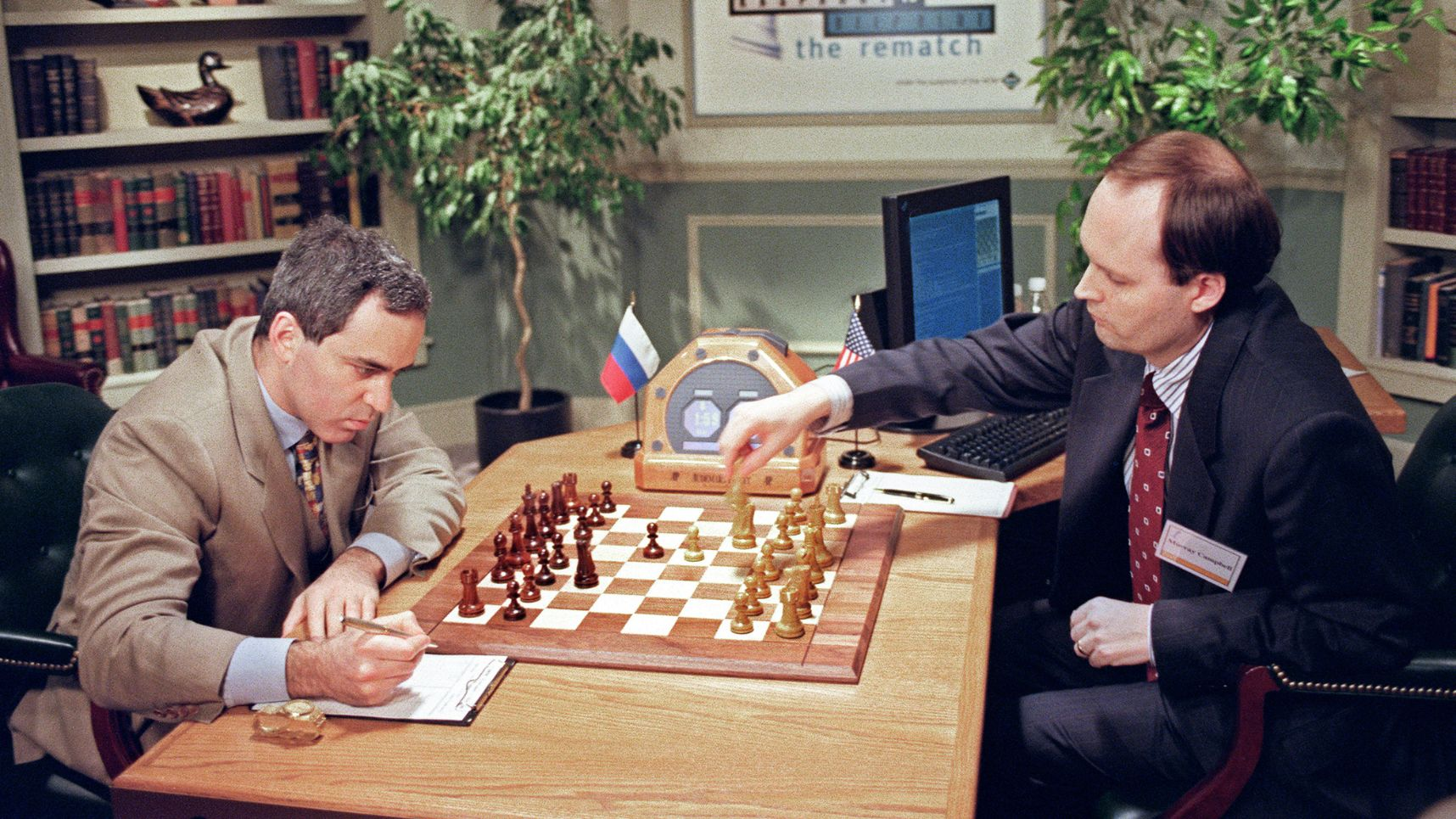
Kasparov lost the six-game match 2½–3½, marking the first time a world champion was defeated by a computer under standard tournament conditions.
The Modern Successors
Centuries after the Mechanical Turk amazed Europe, real chess computers have become part of everyday play. Brands like DGT and Millennium now create beautifully designed electronic boards and computers that combine the charm of traditional chess with the power of modern technology.
Unlike the Turk, these machines really can analyse, learn, and challenge you. Whether you’re practising at home, replaying famous games, or training for tournaments, today’s chess computers bring the spirit of innovation full circle — from a hidden human inside a wooden box to genuine artificial intelligence in your hands.
Check out our chess computers HERE.